
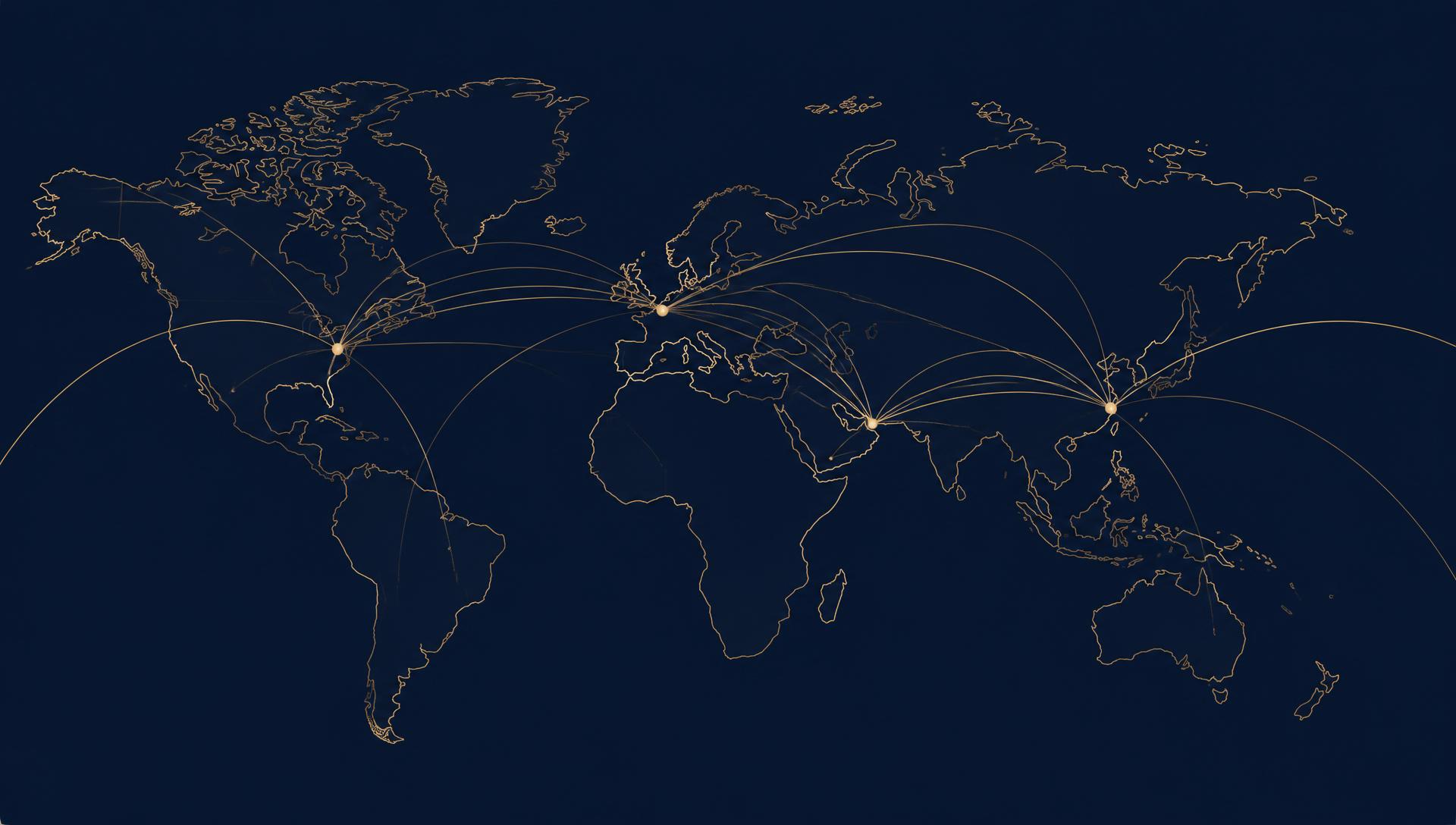
The Americas remain the centre of gravity in business aviation: 79% of global transactions between 2020 and 2024 took place within the region. But that share has fallen by 8.4% since the pandemic, and the reason is not weakness at home. It is strength elsewhere.
Where the movement is happening
Transactions between the United States and EMEA are now strong in both directions — Americas to EMEA at 4% of global sales, EMEA to Americas at 3%. Asia-Pacific to EMEA and the Americas is expected to grow further. Deals that would once have been regional are routinely intercontinental.
Why this changes how you should sell
A cross-border transaction introduces variables that a purely domestic one does not: import and export considerations, registry selection, taxation, financing structures, escrow, and technical acceptance in a foreign jurisdiction. Each is manageable. Together, they reward experience.
The best aircraft for a client in Dubai is frequently sitting in Texas, Geneva or Singapore. Reach is no longer a convenience — it is the advantage.
This is precisely why JetOasis works through a network of trusted relationships across North America, Europe, the Middle East and Asia rather than relying on its own mandates alone. Market access, not inventory, is what puts the right aircraft in front of a client.
Data sources: Jetcraft Market Report 2025 (Ever Forward, 11th edition), combined with JetOasis market observations and industry experience.